
1+1: Beware The Impulse Zone + Deep Work

Here's one leadership idea and one resource I’ve found beneficial in the past two weeks:
1 idea: Beware The Impulse Zone
If you walk into a gas station today, you’re likely to notice a few different “zones” of the store. The Hot Food Zone showcases sweating sausages lazily rolling under a warm light. The Cold Drinks Zone glows along the back wall, its frosty display cases beckoning you to quench your thirst. And then there’s the Odds and Ends Zone where you can find everything from a quart of oil to baby powder to fingernail clippers. But arguably the most strategically designed area is a space that I don’t see as a defined zone at all: The Impulse Zone.
The Impulse Zone is the high-traffic space where you encounter an appealing item that you weren’t thinking about when you walked in the door. Most convenience stores have multiple Impulse Zones—for example, the bin of phone attachments in the main walkway, the end cap of donuts glistening under white lights, and the over-priced candy that greets you at the checkout counter. Conservative studies estimate that one in five convenience store customers walk out with an impulse purchase—adding up to more than $65 billion annually for this industry.
Impulse Zones are great for businesses but terrible for your wallet and your waistline.
The scary truth is that we don’t have to swing by a 7/11 to get sucked into The Impulse Zone. Most of us are never more than five feet away from the small rectangular one that lives in one of our pockets.
Like convenience stores, our phones are designed to profit from our impulsiveness. Colorful app icons invite us to click. Cheerful sound effects reward our progress and urge us to play one more round. Vibrations alert us to check the latest message or score. Each of these distractions steals a bit of unplanned attention, robbing us of the focus needed to do our best work.
If your goal in life is to be entertained until you die, then embracing The Impulse Zone is the way to go. But if you are trying to give your life to a greater purpose as all humble leaders do, then you would do well to steer clear of this focus vortex. Ask yourself:
Would I rather stay completely on top of my email throughout the day or create something that will last for decades?
Would I rather beat the next few levels of Candy Crush or read those books that will elevate my leadership capacity?
Would I rather be available to my boss 24 hours a day or make my kids feel like they are my top priority?
Your best work requires the best of you, so don’t give the best of you to a glass and plastic rectangle. Instead:
Turn off all notifications besides texts and phone calls.
Turn off the ringer to prevent it from interrupting your deep work. Schedule times to check it instead.
Leave your phone in another room until your kids go to sleep.
“Parent” your phone by putting it to bed a few hours before you. Ban screens an hour before bed.
At the end of your life, you won’t wish you’d spent more time playing Wordle or watching TikTok videos, but you might regret failing to achieve your greater purpose.
***
When is your phone most likely to distract you?
What practical steps could you take to break those addictive patterns?
What is a greater purpose that makes that sacrifice worthwhile?
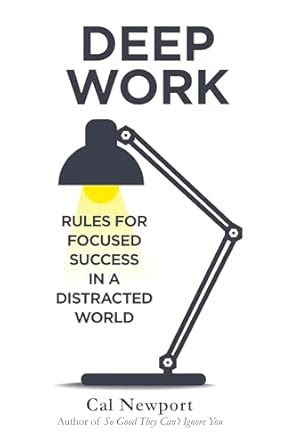
1 resource: Deep Work
If you are engaged in knowledge work, it’s essential that you create stretches of deep work so you can produce your clearest thinking. Nobody has written more about this than professor Cal Newport of Georgetown. If you want to understand the value of this process and learn some practical approaches you can implement to generate more of it, check out his book Deep Work here.


Mình thỉnh thoảng đọc mấy bài soi cầu để có thêm góc nhìn thôi, chứ không bao giờ coi đó là chắc chắn vì còn phụ thuộc may rủi nhiều. Hồi trước mình tự ghi lại theo kiểu thủ công, nhưng hay lẫn lộn chuỗi cầu nên càng ghi càng rối, thành ra mình chuyển sang xem thêm nhận xét của người khác để so sánh cho tỉnh táo. Có đợt mình thử lọc ý từ Soi cầu 366, chỉ giữ những phần hợp với dàn đang theo nên cảm giác bớt bị cảm xúc dắt mũi. Dù vậy mình vẫn đặt giới hạn rõ ràng: chơi vừa sức, thua thì dừng, không cố gỡ. Mình thích kiểu viết giải…